
.png "English")


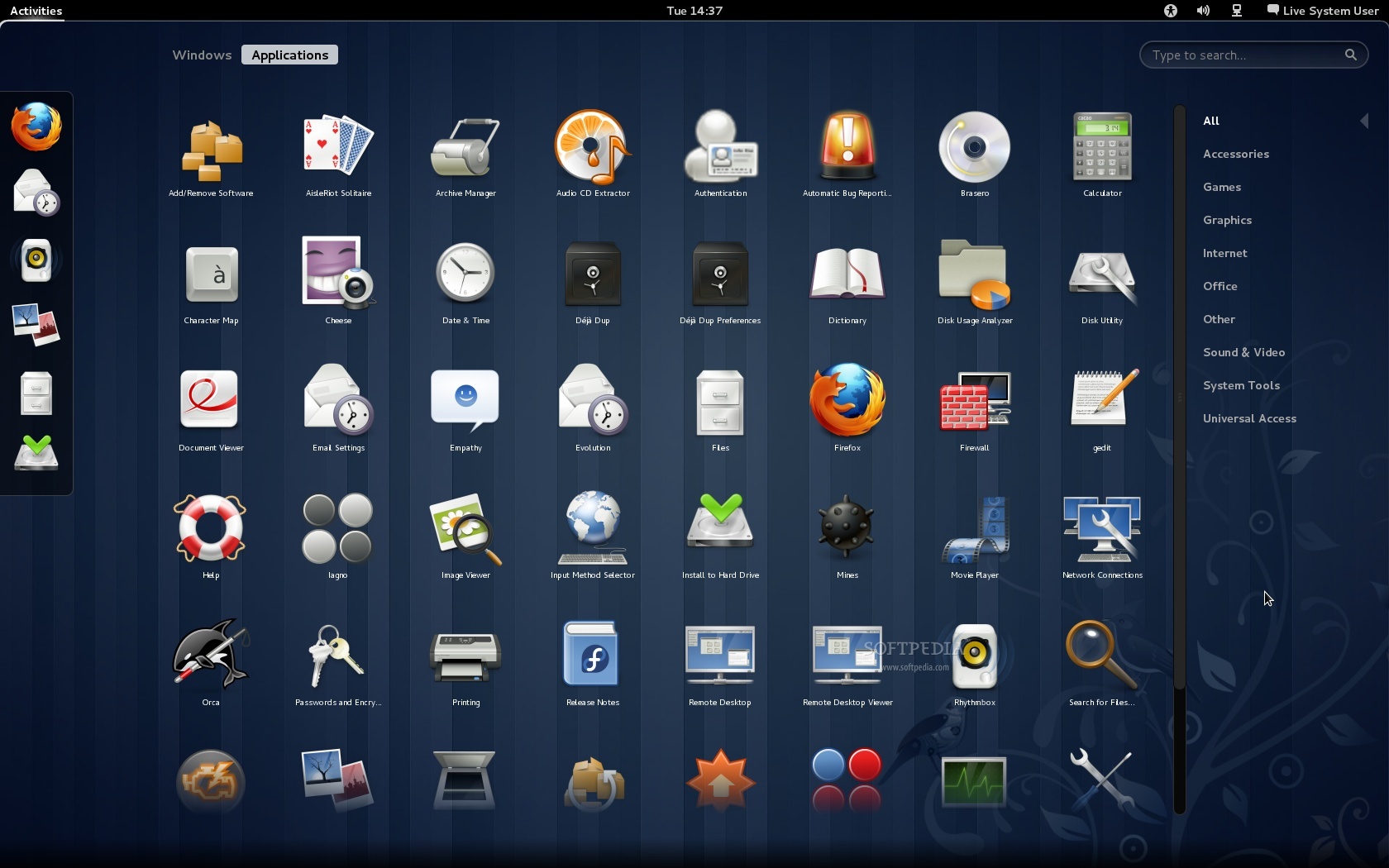
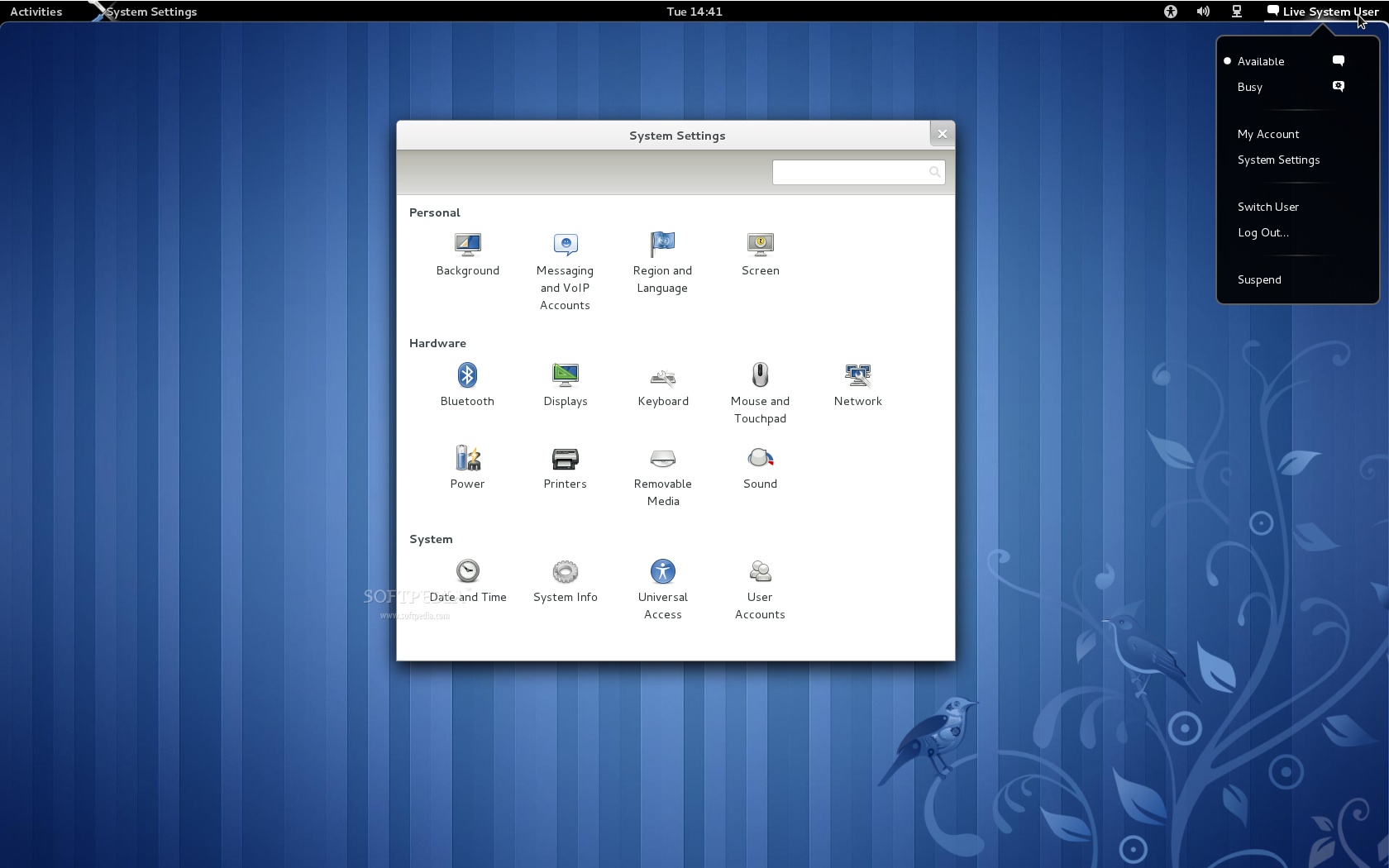
Fedora 15 is dubbed Lovelock and includes the new GNOME 3 desktop environment with the GNOME Shell user interface.
Fedora 15 is powered by Linux kernel 2.6.38 and features a dynamic firewall, Mozilla Firefox 4, LibreOffice 3, a new full-text search tool, and a new double-entry accounting system.
"We bring to you the latest and greatest release of Fedora ever, Fedora 15! Join us and share the joy of Free software and the community with friends and family."
"We have several major new features with special focus on desktops, developers, virtualization, security and system administration." - was stated in the official announcement.
Highlights of Fedora 15:
· Linux kernel 2.6.38.2;
· Btrfs filesystem;
· GNOME 3 desktop environment;
· Indic typing booster;
· Better crash reporting;
· Redesigned SELinux troubleshooter;
· Gnome Shell user interface;
· GTK+ 3.0;
· Xorg Server 1.10;
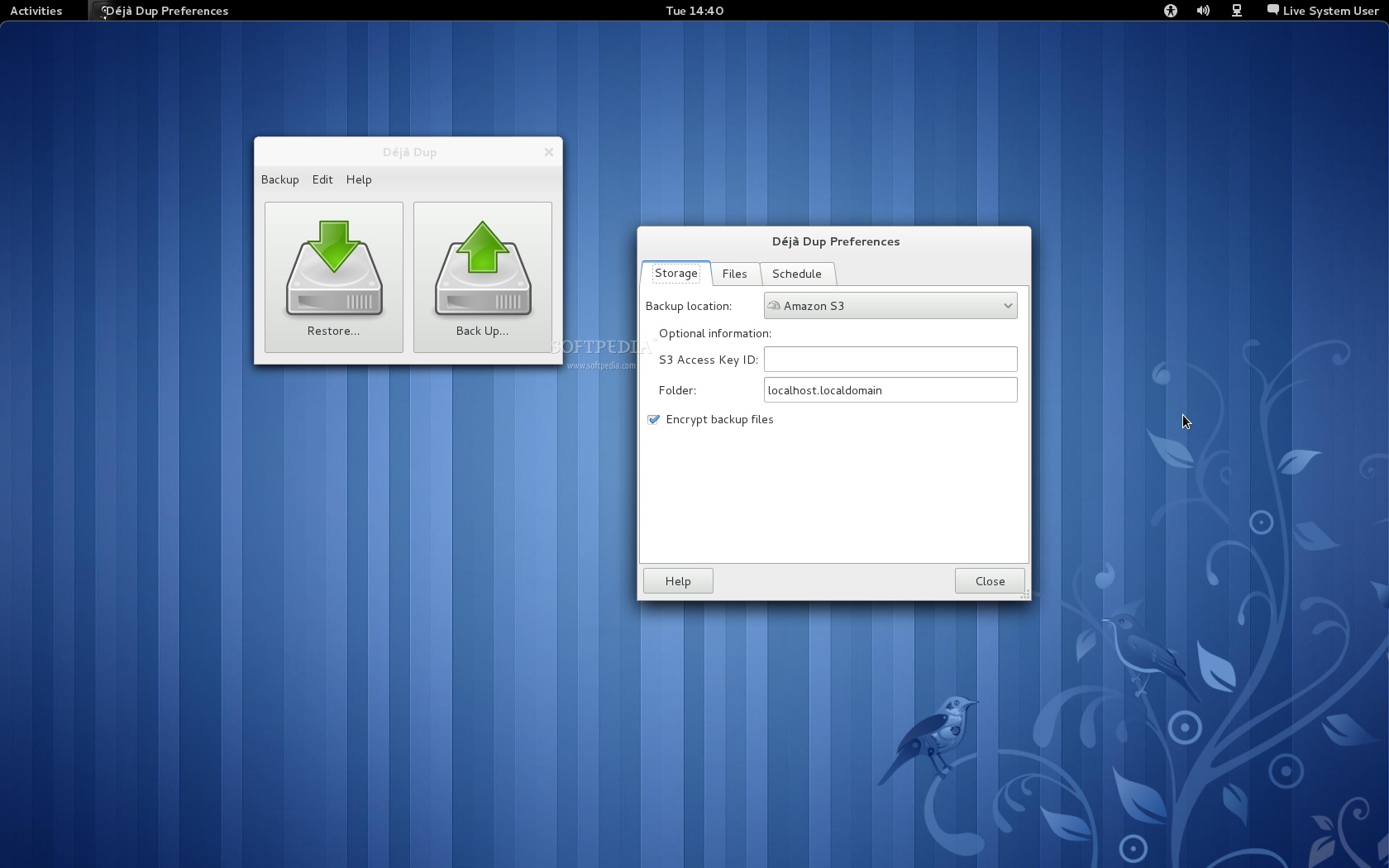
· Deja Dup backup software;
· LibreOffice 3.3 open source office suite;
· Mozilla Firefox 4.0 web browser;
· BoxGrinder appliance (virtual machines) builder;
· Ledger, double-entry accounting system;
· Higher compression in live images;
· recoll, full-text search tool;
· Dynamic firewall;
· IcedTea Java plugin;
· RPM 4.9;
· Python 3.2;
· Rails 3.0.3;
· OCaml 3.12;
· FreeIPA 2.0;
· Maven 3;
· GNU Debugger (GDB) 7.3;
· GCC 4.6;
· Sugar .92 environment;
· eCryptfs support in authconfig;
· LZMA comperssion for Live images;
· Power Management improvements;
· Retrace server;
· Robotics suite.
 |
 |
 |
 |
 |
"The Fedora Project is committed to providing a free and open source software experience to users of all types.
Over the past few releases of Fedora, an incredible amount of work has gone into building a free desktop usable by anyone."
"These features have provided improvements in networking, software management, hardware support, and other functionality. Over the past cycle, work on these features has mostly been to provide bug fixes and additional stability." - was stated in the release notes.
Download the new Fedora 15 operating system right now from here.

Fedora description:
The next genaration Linux distribution from Red Hat
Fedora is now available from Red Hat and at distinguished mirror sites near you, and is also available in the torrent.
Fedora has expanded in this release to four binary ISO images and four source ISO images, and is available for both x86-64 and i386 and also PPC machines.
The Fedora Project is a Red-Hat-sponsored and community-supported open source project. It is also a proving ground for new technology that may eventually make its way into Red Hat products. It is not a supported product of Red Hat, Inc.
The goal of The Fedora Project is to work with the Linux community to build a complete, general purpose operating system exclusively from free software. Development will be done in a public forum. The project will produce time-based releases of Fedora Core about 2-3 times a year with a public release schedule.
The Red Hat engineering team will continue to participate in the building of Fedora Core and will invite and encourage more outside participation than was possible in Red Hat Linux.
By using this more open process, we hope to provide an operating system that uses free software development practices and is more appealing to the open source community.
What's New in This Release:
For desktop users:
A universe of new features for end users:
· libjpeg-turbo: Users can load and save images faster in Fedora 14 than in previous releases.
· Spice: Spice (Simple Protocol for Independent Computing Environments) provides users with an enhanced remote desktop experience. Currently, it provides the rudimentary foundation to take advantage of things like Accelerated 2D graphics, encryption, and hardware cursor support.
For developers:
For developers there are all sorts of additional goodies:
· D: Fedora 14 introduces support for D, a systems programming language combining the power and high performance of C and C++ with the programmer productivity of modern languages such as Ruby and Python.
· Python 2 upgrade: The system python 2 stack has been upgraded to 2.7.
· GNUStep: A GUI framework based of the Objective-C programming language which is part of the gcc.
· Memory Debugging Tools: The new "gdb-heap" package adds a new "heap" command to /usr/bin/gdb which allows you to get a breakdown of how a process is using dynamic memory.
· Rakudo Star: An implementation of Perl version 6, based on the Parrot VM.
· Support for Milkymist: Developers can enjoy developing for Milkymist, an open hardware embedded board, on Fedora 14. Thanks to the Fedora Electronic Lab for their work in this regard.
For system administrators:
And don't think we forgot about the system administrators:
· Fedora is now available for users of the Amazon Elastic Computing Cloud service, released concurrently with the traditional release.
· virt-v2v assists in the easy migration of Xen virtual machines to KVM virtual machines.
· A Virtualization Technology Preview Repo allows users to test the very latest developments in virtualization related packages.
· Varnish has been updated and includes improved scalability and a new log function.


0 comments:
Post a Comment